

















Indoor climbing has grown steadily into one of the most accessible full-body activities available to people of all ages and fitness levels. As purpose-built walls have appeared inside leisure complexes and retail parks across the country, the sport has moved well beyond specialist gyms. Facilities like the Rock Up Climbing Centre in Whiteley reflect a broader trend toward supervised, structured environments where complete beginners can give climbing a go without any prior experience or kit. This guide covers what to expect on a first visit, the main types of indoor climbing, essential safety habits, and how to build skills at a sensible pace. It is no substitute for in-person instruction from qualified staff, but it offers a practical foundation before you arrive.
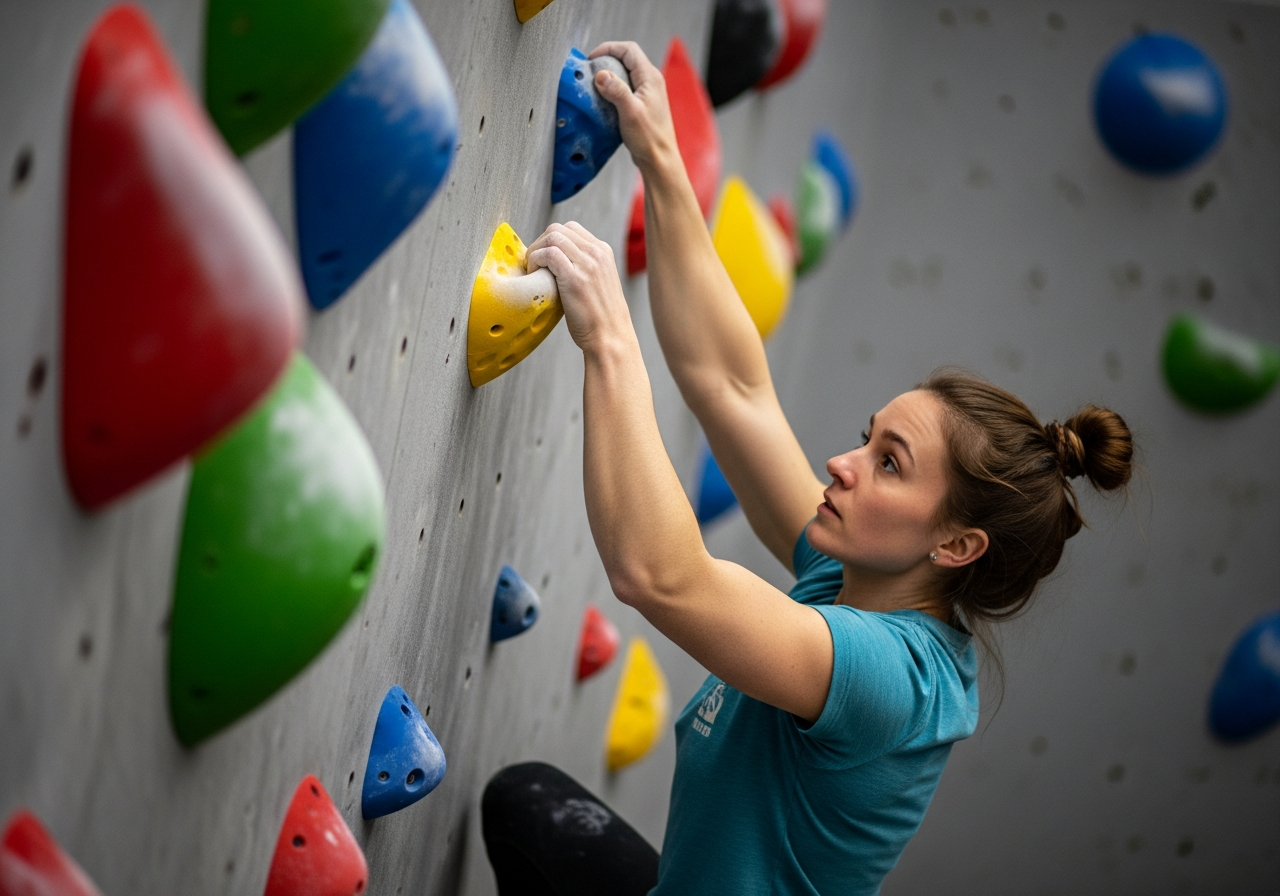
Understanding the Basics of Indoor Climbing
Indoor walls use colour-coded holds and graded routes to organise difficulty from the most forgiving to the genuinely challenging. Three disciplines are common at most facilities:
- Bouldering – Short walls without ropes, protected by thick crash mats. Routes are called problems and tend to focus on powerful, precise movements.
- Top-rope climbing – A rope is already anchored at the top; the climber wears a harness and is supported by a belayer standing on the ground.
- Auto-belay – An automatic device attached to the wall takes in slack as you climb and lowers you gently if you let go, making it particularly well-suited to solo beginners.
Beyond the obvious physical challenge, climbing develops full-body strength, grip, mobility, and cardiovascular endurance. It also demands sustained concentration — reading a route and planning moves ahead engages problem-solving in a way that most other gym activities simply do not.
Key takeaway: Indoor climbing builds strength, coordination, and mental focus at the same time, making it an unusually efficient activity for beginners.
Safety First
Indoor centres manage risk through padded flooring, regular equipment inspections, clear signage, and supervision by qualified instructors. Even so, climbing carries inherent physical risk, and following staff briefings precisely is non-negotiable.
Core safety habits to develop from day one include:
- Correct harness fitting — every buckle doubled back and checked before leaving the ground.
- Partner checks — verifying each other’s knot, harness, and belay device before climbing. This mutual verification matters because even experienced climbers make errors when distracted.
- Staying clear of fall zones and never walking beneath an active climber.
- Descending in a controlled manner rather than jumping from height wherever avoidable.
Many centres follow guidance from national climbing or mountaineering organisations, which set standards for equipment maintenance and instructor qualifications. Checking that a facility holds relevant accreditation is a straightforward way to gauge its overall safety culture.
Preparing for Your First Session
Wear flexible, close-fitting sportswear that allows a full range of movement. Remove jewellery and avoid loose fabric that can catch on holds. Climbing shoes — available to rent at most walls — provide the grip and precision that ordinary trainers simply cannot replicate, so it is worth using them right from the start.
Most centres begin with a registration form, a brief safety induction (often a short video followed by a staff walkthrough), and a supervised introduction to basic movements. No particular fitness level is required for introductory sessions, though any significant health concerns should be raised with staff beforehand.
Key takeaway: The induction is designed to help you, not assess you — so ask questions freely.
Building Technique and Good Habits
The single most effective piece of advice for new climbers is: climb with your legs, not just your arms. Beginners instinctively pull with their upper body and tire quickly as a result. Shifting weight onto the feet, keeping the hips close to the wall, and maintaining three points of contact wherever possible reduces fatigue dramatically. One session spent focused purely on footwork will often produce more visible improvement than several sessions of simply attempting harder routes.
Progress through grades gradually. Repeating easier climbs to refine movement quality builds a far more durable foundation than chasing difficulty too soon. If sharp pain — rather than general effort — appears in the fingers, elbows, or shoulders, rest and seek professional advice before continuing.
Community, Etiquette, and the Long Term
Climbing walls typically bring together a broad mix of abilities sharing the same space. A few simple etiquette principles help everyone get the most out of the environment:
- Wait your turn on busy routes rather than jumping on a problem someone is actively working through.
- Avoid offering unsolicited advice (“spraying beta”) unless specifically asked.
- Stay aware of personal space, particularly in bouldering areas where movement can be unpredictable.
Indoor climbing is well-suited to long-term participation because it scales naturally with age, fitness, and available time. Pairing it with adequate rest and varied exercise supports sustainable progress and reduces the risk of overuse injuries.
Starting Well and Staying Curious
Indoor climbing offers a rare combination: genuine physical challenge, mental engagement, and a welcoming community that tends to be far less intimidating than it first appears. The most important step is arriving at a reputable facility, approaching the induction with an open mind, and starting on routes that feel manageable. Confidence and technique develop together over time, and the learning curve — though occasionally humbling — is a large part of what makes the activity so rewarding. The information here is general guidance; specific safety rules at any given centre always take priority, and qualified instructors remain the most reliable source of personalised advice.


Leave a Reply