

















A well-designed bedroom helps your child feel calm and ready for a good night’s sleep. If your child struggles to fall or stay asleep, their bedroom setup might be part of the problem. Here are some tips to help you create a space that supports healthy, restful sleep.
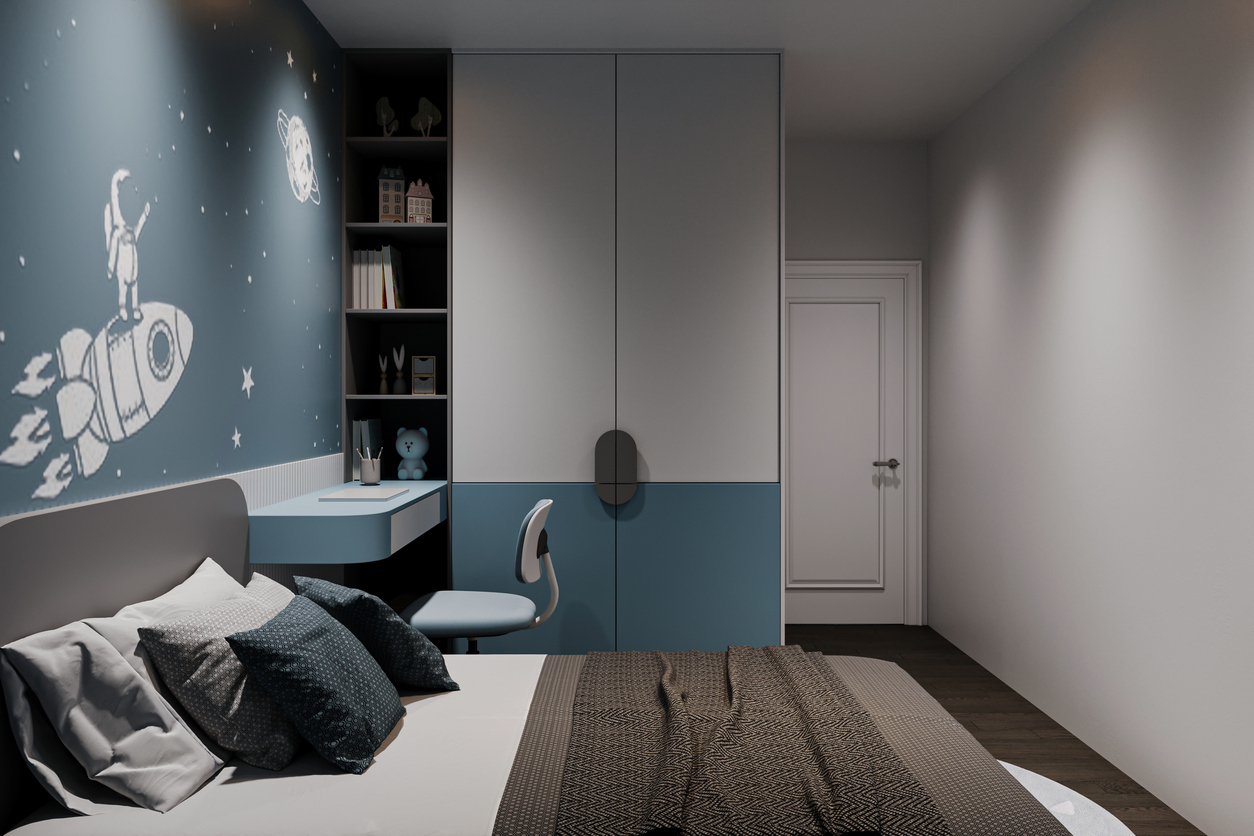
Choose a calming colour palette
The colours on your child’s walls, bedding and décor influence their mood and energy levels.
Bright reds and yellows stimulate the brain and increase alertness, making it harder to unwind. Instead, opt for calming and soothing tones such as soft blues, muted greens or warm neutrals. If your child loves bold colours, incorporate them in accents like pillows or artwork rather than on large surfaces.
Optimise lighting for better sleep
Light affects the body’s production of melatonin, the hormone that regulates sleep. Bright artificial lighting in the evening confuses the brain, making it harder for your child to feel sleepy.
To counteract this, install blackout curtains to block streetlights and natural light at bedtime. Replace harsh overhead bulbs with warm, dimmable lamps to create a softer atmosphere. If your child needs a nightlight, choose one with a red or amber glow rather than blue or white.
Declutter to create a calm atmosphere
A cluttered room feels chaotic and overstimulating, making it harder to relax.
Instead of allowing toys and books to pile up, use practical storage solutions to keep the space organised. Store everyday items in labelled bins or baskets within easy reach, and tuck away less frequently used belongings in under-bed drawers or closets.
Stylish kids’ bunk beds with built-in storage are a great option for maximising floor space while keeping the room tidy. Before bedtime, guide your child through a quick five-minute tidy-up routine to reinforce the habit of keeping their room clutter-free.
Invest in a comfortable and supportive bed
Your child’s bed should be a place they look forward to at the end of the day.
A supportive mattress ensures proper spinal alignment and reduces tossing and turning. Soft, breathable bedding made from natural fabrics like cotton or bamboo helps regulate body temperature, preventing discomfort. A favourite stuffed animal or a cosy blanket can provide a sense of security, making bedtime feel inviting rather than stressful.
Establish a relaxing bedtime routine
Children thrive on routine, and a predictable bedtime ritual signals their brain that sleep is approaching.
About an hour before bed, shift to quiet, screen-free activities like reading or listening to soothing music. If your child resists winding down, introduce a relaxing sensory element, such as a lavender-scented pillow spray or a warm bath. Keep bedtime the same each night, even on weekends, to reinforce their natural sleep cycle.


Leave a Reply