
















Cooking with wine is a time-honored practice that has been enhancing dishes for centuries, infusing meals with rich, complex flavors and aromas. From hearty stews to light seafood sauces, wine can elevate the taste of almost any dish, transforming simple ingredients into something extraordinary. However, to make the most out of cooking with wine, it’s important to know how and when to use it effectively.
At its best, wine in cooking offers acidity, moisture, and a deep flavor profile that works in harmony with other ingredients. As the wine heats up, much of the alcohol evaporates, leaving behind the wine’s fruitiness, earthiness, or spice, which complements and enhances the flavors in the dish. For instance, a touch of white wine can add brightness to a creamy risotto, while a splash of red wine can deepen the flavors in a braised roast. Whether you’re deglazing a pan or simmering a stew, wine can provide that final touch that brings a dish together.
Which Wines to Use for Cooking
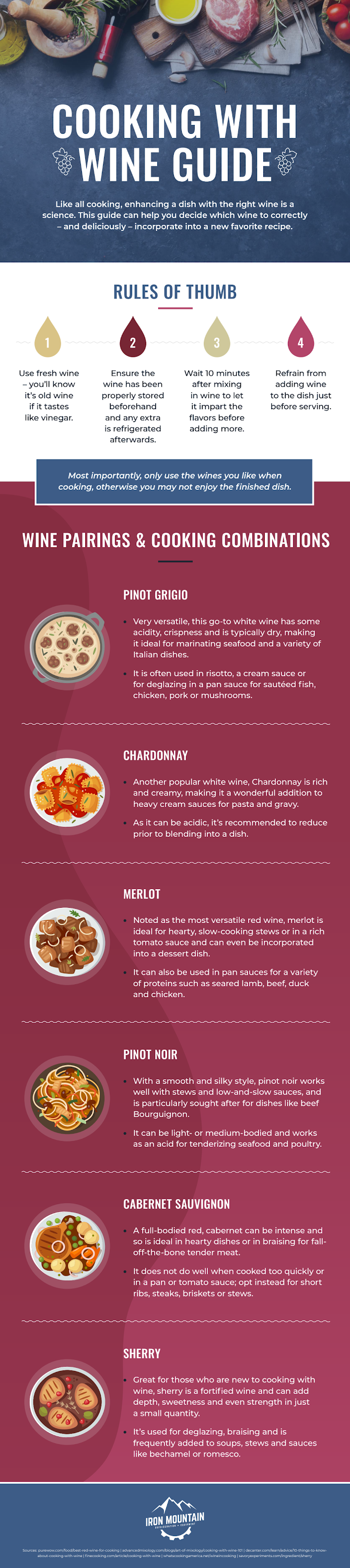
Not all wines are suitable for cooking. Typically, dry red and white wines are the best choices for savory dishes. Light and dry white wines like Sauvignon Blanc or Pinot Grigio are excellent for dishes with poultry, seafood, or creamy sauces, providing a crisp, refreshing contrast. Meanwhile, fuller-bodied reds like Merlot, Cabernet Sauvignon, or Pinot Noir pair perfectly with heartier dishes like stews, braised meats, or tomato-based sauces.
The old idea that cooking wine and drinking wine are two different things has always struck me as backwards,” says Curtis Hascall, head winemaker at Shale Oak Winery in Paso Robles. “If a Cabernet or a Syrah is good enough to pour, it’s good enough to reduce into a sauce. You’re just concentrating what was already there, so cutting corners on the bottle only means cutting corners on the dish.
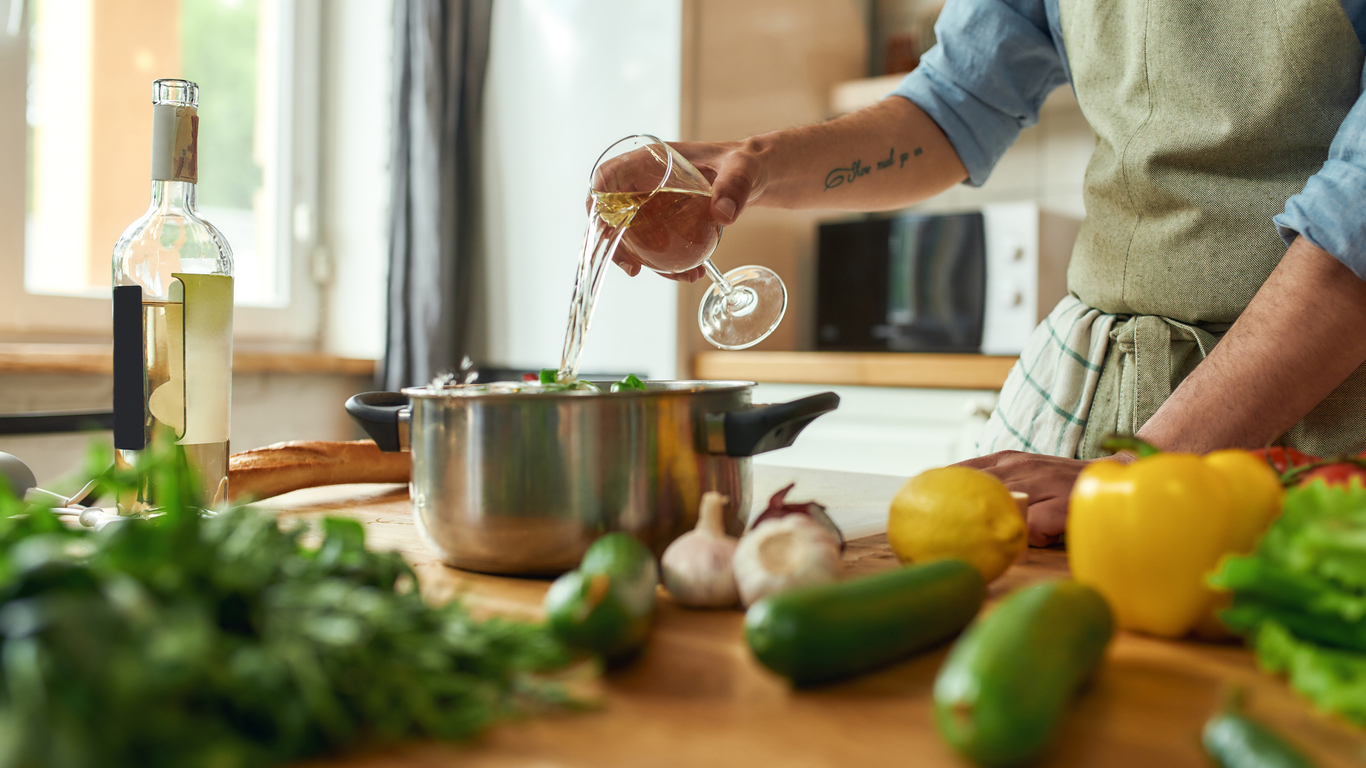
It’s important to avoid using “cooking wines” available in stores, as they often contain added salt and preservatives that can negatively affect your dish’s flavor. Instead, use a wine that you would enjoy drinking — it doesn’t need to be expensive, but if it tastes good in the glass, it will likely taste good in the dish.
When to Add Wine to Your Cooking
The timing of wine in cooking is key. You want to allow the wine enough time to reduce and integrate its flavors into the dish. For instance, when making a sauce, it’s common to deglaze the pan with wine right after browning your meat or sautéing the aromatics. For slow-cooked dishes like coq au vin or beef bourguignon, you can add wine at the beginning along with the broth. In quicker dishes, such as pan sauces or finishing glazes, adding wine in the final stages of cooking and simmering it for a few minutes will help mellow the alcohol.
Pairing Wine with Food
Just like pairing wine with a meal, pairing wine with a dish while cooking requires balance. Lighter dishes, such as fish, won’t stand up to a heavy red, and a delicate sauce would be lost with a bold wine. Think of the wine as an ingredient that should enhance, not overpower, the flavors of the dish.
Storage and Helpful Tips
If you don’t finish the wine, you’ve opened while cooking, don’t worry — it can be stored and reused. Simply refrigerate the bottle for a few days or freeze wine in ice cube trays for easy future use. Professional kitchens, where efficiency is paramount, often rely on commercial fridges to keep ingredients, including open bottles of wine, at the proper temperature. This ensures that wines are stored safely, maintaining their flavors and quality for future use in cooking.
Cooking with wine can transform your dishes, adding depth, flavor, and a special touch that is hard to achieve with any other ingredient. Whether you are a seasoned chef or an eager home cook, incorporating wine into your recipes opens up a world of culinary possibilities. Remember to use a wine you enjoy drinking, add it at the right time, and pair it carefully with your dish. The result will be a delicious meal that is sure to impress.


Leave a Reply