

















Playtime is more than just a means for children to release their energy; it is a crucial component of their cognitive development. In recent years, research has shown that engaging in play can significantly influence a child’s ability to learn, problem-solve, and navigate complex social interactions. The right kinds of play, such as active outdoor activities and skill-focused toys, foster brain development, helping children grow into well-rounded, curious, and creative individuals. This article will explore the remarkable ways that playtime, particularly with 6ft trampolines and Montessori wooden toys, supports cognitive growth and why these experiences are invaluable for children.
Understanding Cognitive Development in Children
Cognitive development refers to the process by which children acquire knowledge, understanding, problem-solving skills, and creativity. From infancy through adolescence, a child’s brain undergoes massive changes that shape their ability to think, learn, and retain information. While genetics play a role, experiences during childhood are crucial to fostering a child’s cognitive abilities. Play, often seen as simple enjoyment, is actually a critical part of these developmental stages.
Play can be broadly categorised into two types: structured and unstructured. Structured play includes activities that have specific goals and rules, such as board games or puzzles, while unstructured play is free-form and often self-directed, allowing for exploration and creativity. Both are valuable for different reasons and contribute uniquely to cognitive development. Interestingly, incorporating specific play equipment like 6ft trampolines for active, physical play and Montessori wooden toys for tactile, mindful play can optimise a child’s learning experience in multiple ways.
The Role of Active Play: Benefits of 6ft Trampolines
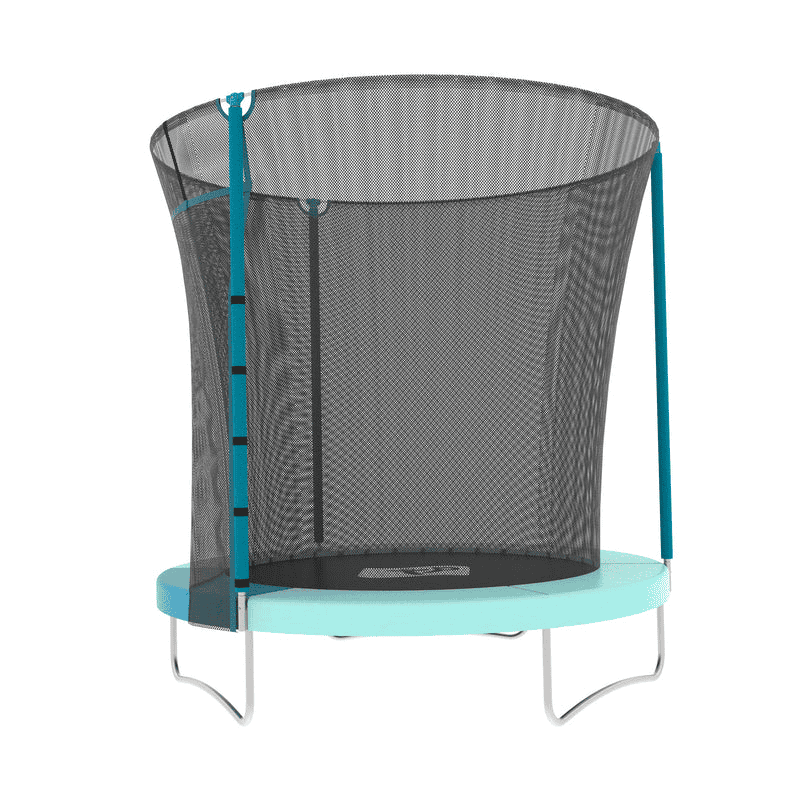
Physical play has profound impacts on cognitive growth, with benefits that go far beyond the obvious improvement in physical fitness. Active play encourages better circulation, which in turn improves brain function, memory retention, and concentration. One excellent example of a physical play tool that promotes both exercise and mental engagement is the 6ft trampoline.
1. Enhancing Motor Skills and Coordination
Jumping on a 6ft trampoline requires children to use various muscle groups, enhancing their coordination and motor skills. As they jump, their brain constantly makes adjustments to maintain balance, strengthening neural pathways that are essential for both physical and cognitive tasks. These pathways are not just for coordination; they lay a foundation for learning skills like writing, cutting, and even playing musical instruments, all of which require fine motor precision.
2. Improving Spatial Awareness
When bouncing on a trampoline, children become aware of their position in space, which enhances spatial awareness. Spatial awareness is an important cognitive skill, helping children understand concepts of distance, direction, and orientation. These skills are fundamental to problem-solving tasks and can boost academic abilities in subjects such as mathematics and science, where spatial reasoning is vital.
3. Building Resilience and Mental Focus
Using a trampoline also fosters resilience and focus. Children learn to concentrate on their movements, building focus and patience. With each bounce, they might try to improve or learn a new trick, which instills perseverance and a growth mindset – the belief that they can improve with effort. Such experiences prepare them for challenges in other aspects of life, from classroom learning to social relationships.
Nurturing the Mind with Montessori Wooden Toys
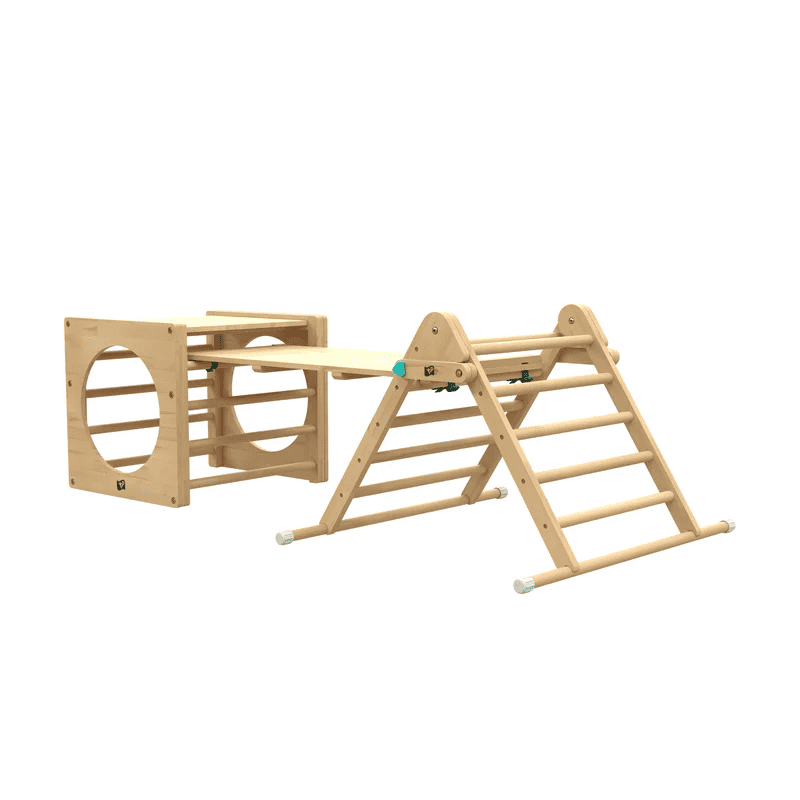
While physical play on a 6ft trampoline promotes motor and spatial skills, quiet, focused play with Montessori wooden toys supports other facets of cognitive development. Montessori wooden toys, known for their simplicity, durability, and versatility, promote hands-on, mindful play that aligns with the Montessori educational philosophy. This method emphasises self-directed learning and encourages children to explore and discover at their own pace. Look no further than Montessori toys for brain development.
1. Encouraging Problem-Solving Skills
Montessori wooden toys often include puzzles, stacking blocks, and construction sets, all of which require children to engage in problem-solving. When a child figures out how to stack blocks or complete a puzzle, they learn to observe, hypothesise, and experiment. This process, while seemingly simple, builds essential skills in logical reasoning and critical thinking.
Children are naturally curious, and these toys allow them to take on mini “challenges” without strict rules, providing a learning environment where they feel safe to explore ideas, make mistakes, and try again. Such play sessions mirror real-life learning, where problem-solving is essential, and curiosity is the driver of discovery.
2. Boosting Memory and Concentration
Wooden toys used in a Montessori setup are often open-ended, meaning they don’t limit children to one specific way of playing. This fosters creativity and self-guided play, which in turn develops memory and concentration. A child playing with a set of wooden animals, for example, might arrange them in patterns or create imaginary scenarios. Remembering each character’s position, story, or relationship requires memory skills and focused attention, essential cognitive abilities that carry over to academic tasks.
3. Enhancing Fine Motor Skills
Playing with Montessori toys also enhances fine motor skills, which are important for tasks like writing, buttoning clothes, and tying shoelaces. These toys are specifically designed to be grasped, stacked, and manipulated, encouraging children to use their fingers and hands in precise ways. Every twist, turn, or stack strengthens the child’s fine motor coordination, which is not only crucial for daily life skills but also for cognitive tasks that require precision and attention to detail.
Social and Emotional Benefits of Play
Both active and mindful play are not just beneficial for cognitive development; they also nurture emotional and social growth. For example, a child bouncing on a 6ft trampoline with friends learns cooperation, patience, and turn-taking. They experience the joy of shared laughter, which builds positive social connections and helps them understand the nuances of interpersonal interactions. Similarly, playing with Montessori toys often involves quiet time, encouraging introspection and focus. In both types of play, children learn self-control, empathy, and emotional resilience – all of which are crucial life skills.
Bringing it All Together: A Balanced Approach to Play
Parents and educators can maximise a child’s cognitive growth by offering a balanced mix of active and mindful play. Providing access to tools like 6ft trampolines and Montessori wooden toys offers varied, enriching experiences. The combination of physical, mental, and social stimulation that these play experiences offer helps develop the “whole child” – nurturing their body, mind, and emotions in tandem.
Children need both structured and unstructured play opportunities, and each type offers its own set of benefits. For instance, unstructured play on a trampoline lets children engage in boundless exploration, while structured play with Montessori toys promotes patience and methodical thinking. Together, these experiences provide children with a well-rounded developmental foundation.
Conclusion
The benefits of play in supporting cognitive development are extensive and profound. From enhancing motor skills and coordination on a trampoline to fostering creativity and problem-solving with Montessori toys, play is a powerful, natural learning tool for children. By investing in diverse play activities – both physically engaging and mentally stimulating – parents and caregivers can support children in reaching their full cognitive potential.
Encouraging a balanced mix of play with tools like 6ft trampolines and Montessori wooden toys equips children with essential skills that extend far beyond the playroom. These experiences help children learn not only academic concepts but also the perseverance, curiosity, and social acumen they need to thrive in the world. In the end, play isn’t just a pastime; it’s a cornerstone of cognitive growth and lifelong learning.


Leave a Reply