

















Walking has recently evolved into a primary fitness pillar for adults looking to stay active without the heavy toll of high-impact exercises. A recent study analyzing older adults with arthritis found that walking at least 151 minutes per week was associated with a 23 to 30 percent reduction in the odds of experiencing severe joint pain. However, maximizing these benefits means taking proactive steps to protect your hips, knees, and ankles from unnecessary strain.
Whether you are hitting the neighborhood sidewalks or exploring local nature trails, a few simple adjustments can make your routine safer and more effective. Here are five smart ways to protect your joints while walking for fitness.
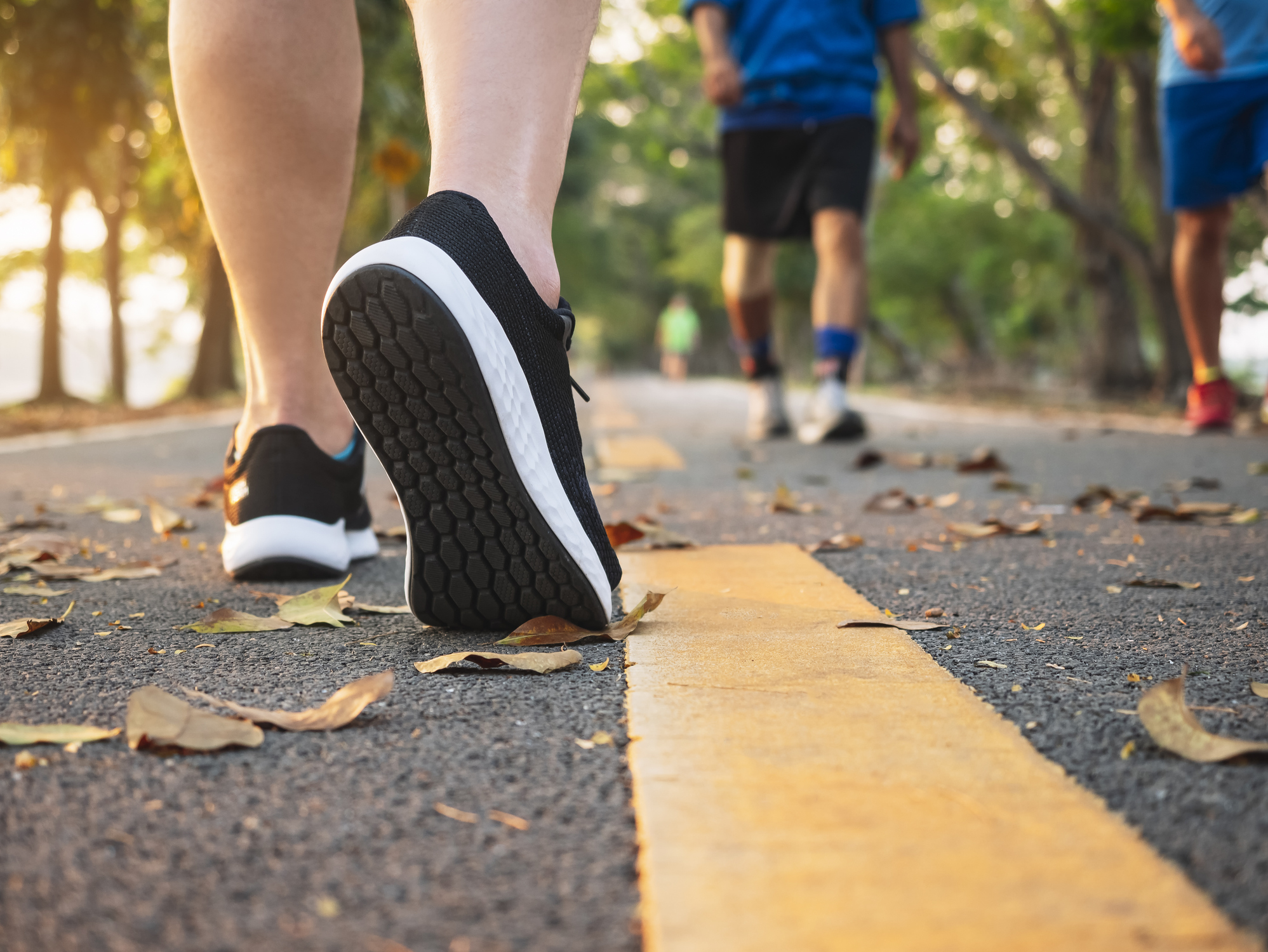
Invest in Proper Foot Care
It is easy to assume that buying the thickest, softest walking shoes will solve all joint problems. However, recent biomechanical assessments show that wearing maximalist shoes with extreme cushioning does not significantly lower external impact loading on the joints compared to traditional footwear. Instead, focus on shoes that offer proper structural support for your unique arch and stride.
Protecting your joints during physical activity literally starts from the ground up. In fact, taking care of your feet with supportive footwear, proper hygiene, and daily attention makes a massive difference in your comfort. Healthy feet maintain your body alignment, which directly reduces the compressive force on your knees and lower back.
Choose the Right Terrain for Shock Absorption
Where you walk is just as important as how far you walk. Hard surfaces like concrete and asphalt completely lack shock absorption. Every time your foot strikes the pavement, the full impact force travels directly into your joints.
To minimize this stress, try mixing up your routes to include softer, natural terrains. Grass, dirt paths, and wooded trails offer significantly better shock absorption. A recent biomechanical study even demonstrated that walking on sand increases the range of motion and muscle activity in the lower extremities, providing an excellent environment for joint rehabilitation. Just keep in mind that uneven surfaces require greater physical stabilization to prevent twisted ankles.
Use Stability Aids to Distribute the Load
Navigating uneven terrain or tackling slight inclines can increase gait variability and put sudden stress on your lower body. Carrying collapsible walking sticks provides an easy, highly practical way to reduce joint strain and improve balance on outdoor trails without weighing you down. These tools allow you to lean into your upper body, effectively taking pressure off your knees during a descent.
Using poles is more than just a trail safety measure, as it actually transforms your walk into a comprehensive workout. According to experts at Harvard Medical School, incorporating walking poles into your routine can prevent stability problems and ease lower-body discomfort by adding core strength through a cross-body action. Because of this added upper-body involvement, engaging with poles recruits up to 90 percent of your body muscles and can increase your overall calorie burn by 20 to 46 percent compared to walking without aids.
Be Mindful of Your Gait and Posture
How you hold your body while walking dictates where the physical impact lands. Slouching or looking down at your phone shifts your center of gravity forward, forcing your knees and lower back to work overtime to keep you upright.
Keep your head lifted, your shoulders relaxed, and your core slightly engaged. Clinical trial data published in 2025 revealed that subtly adjusting your foot angle while walking can reduce knee osteoarthritis pain as effectively as over-the-counter medications and even slow down joint cartilage degeneration. Pay attention to how your foot strikes the ground, aiming for a smooth heel-to-toe roll rather than a heavy, flat-footed stomp.
Build Up Your Routine Gradually
Even the lowest-impact exercise can cause repetitive strain injuries if you ramp up the intensity too quickly. If you want to make walking a sustainable part of your lifestyle, you need a progressive approach.
Follow these basic guidelines to safely build up your endurance:
- Set manageable time goals, starting with 15 to 20 minutes a day before slowly increasing your duration to hit that optimal 150 minutes per week.
- Incorporate active recovery days focused on gentle stretching or water aerobics to give your joints a break.
- Track your metrics using a fitness device to monitor cadence and elevation, ensuring you are not overexerting yourself on steep hills.
- Consider joining a structured walking club or an evidence-based program like Walk With Ease, which is proven to increase balance and safely reduce joint discomfort.
Protecting your joints does not mean slowing down. By paying attention to your terrain, supporting your feet, and using the right tools, you can enjoy a pain-free walking routine for years to come.
Price publication: 65.00 USD
Total: 65.00 USD


Leave a Reply