















The space in which a child studies has more influence on the quality of their work than most parents realise. A good study space does not require a dedicated room, expensive furniture or extensive renovation. What it requires is a small amount of thought, applied consistently. Here is what actually matters.
Choose the Spot With Care
The first decision is location, and the right answer is rarely the obvious one. Many parents default to the child’s bedroom, on the reasonable basis that it is their own space. The trouble is that bedrooms are also full of distractions, sleep cues and visual clutter. A bedroom desk often becomes a place where homework starts well and finishes badly.
For many families, a corner of the living room, dining room or kitchen works better, particularly for younger children. A space where an adult is occasionally present, where the noise is moderate and the room is not associated with sleep, tends to support focus more than the lonelier bedroom.
The Furniture Basics
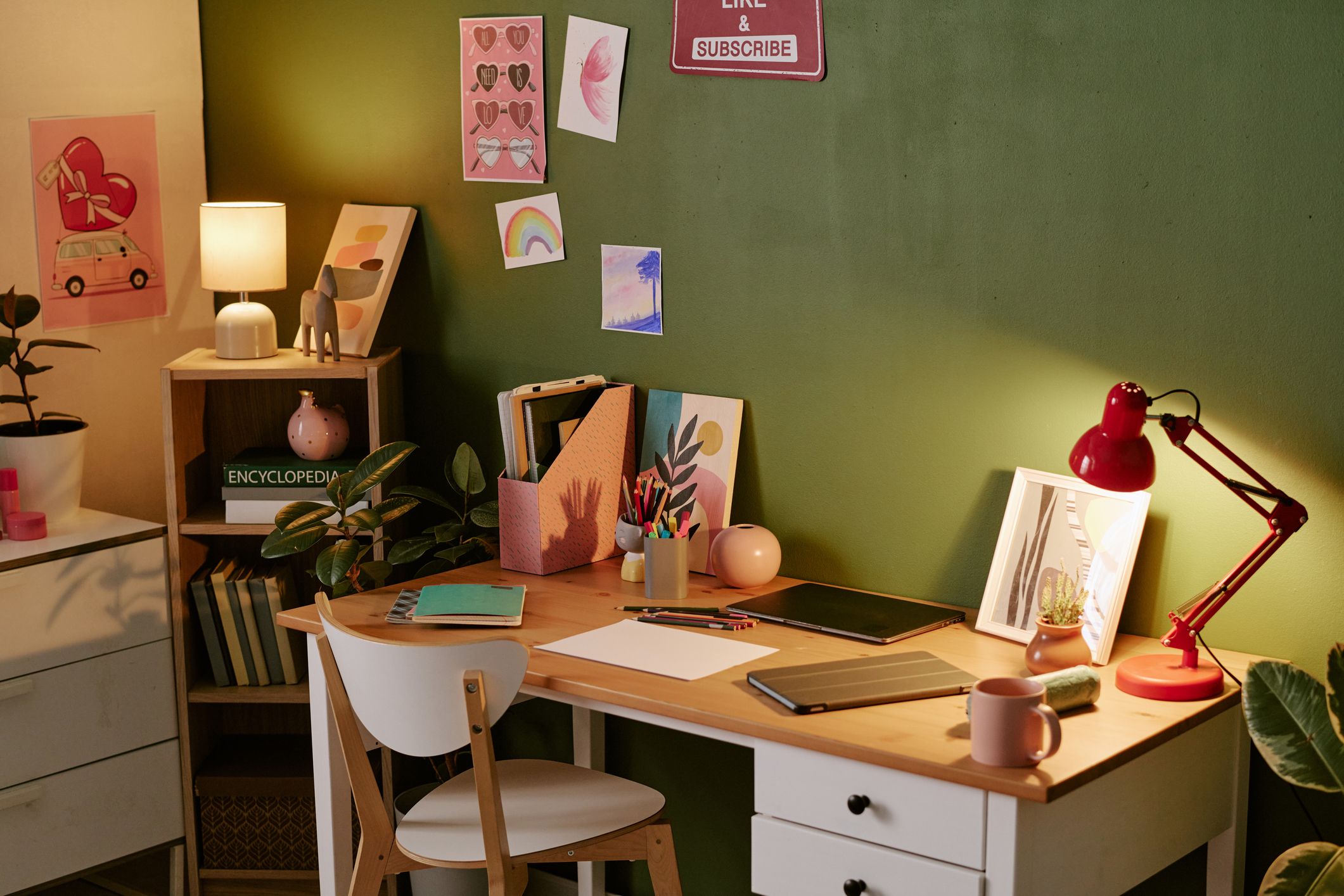
There is no need for elaborate equipment. The essentials are simple, and prep schools that take the home-school partnership seriously often share useful guidance. Old Vicarage School and many similar schools will advise families on the practical conditions that support concentration. Most of it comes down to a small handful of things.
- A flat work surface big enough for a textbook, a notebook and an arm.
- A chair that lets the child sit with both feet on the floor.
- A lamp with a steady, warm light, not the overhead alone.
- A small shelf or tray for current work, so it does not migrate around the house.
- A spot for stationery that is restocked from time to time.
Manage the Visual Field
Children are more affected by visual clutter than adults realise. A desk piled with paperwork from three months ago, surrounded by toys, posters and bric-a-brac, is one in which focus is structurally harder.
Keep the immediate area clear. A blank stretch of wall in front of the desk is better than the most beautiful poster. A small set of items on the desk itself, used regularly, is better than a museum of past projects.
Light, Air and Temperature
Three environmental factors do most of the work in determining focus:
- Light. Natural light is best, supplemented by a desk lamp on darker evenings. Screen glare is worth eliminating.
- Air. A fresh, cool room beats a stale, warm one for concentration almost every time.
- Sound. Some children focus better in moderate ambient noise, others in silence. Watch your particular child and adjust.
These factors compound. A child working in good light, a cool room and a manageable sound environment will outperform the same child in a stuffy, dimly lit, distracting room, on any given evening.
Phones, Tabs and Notifications
The hardest battle in any modern study space is the digital one. The general principle: out of sight, out of mind. Phones in a different room during homework. Browser tabs closed. Notifications off. If the student must use a computer for research, agree in advance which sites are needed and stick to them.
Treat this as a structural fix rather than a moral question. Removing digital temptation is much easier than resisting it in the moment, even for adults.
Rotate the Materials
Every few weeks, do a small reset on the study space. Clear out old worksheets. Sharpen the pencils. Restock the highlighters. Move the active books to the front. This small maintenance keeps the space feeling alive and signals to the child that their work environment matters.
Get them involved in the process. A child who has just spent ten minutes sorting their own desk will return to it more willingly than one who has been told to use a space adults curated alone.
Beyond the Desk
Eventually, every student needs to learn to work in less-than-ideal environments. University libraries, train carriages, cafés, hotel rooms. Building a good home study space is not about producing a child who can only concentrate in one perfect setting. It is about giving them a baseline experience of what good focus feels like, so they can recreate it elsewhere.
The home study space is, in this sense, a kind of teacher. The lessons it quietly delivers will travel with the child long after they have left it. For more on the home-school partnership and prep school education, visit https://www.oldvicarageschool.co.uk/.
About the Author
This article was contributed by Old Vicarage School, an independent prep school in Richmond, offering a warm, family-feel education for girls from Nursery to Year 6.
Learn more: https://www.oldvicarageschool.co.uk/


Leave a Reply